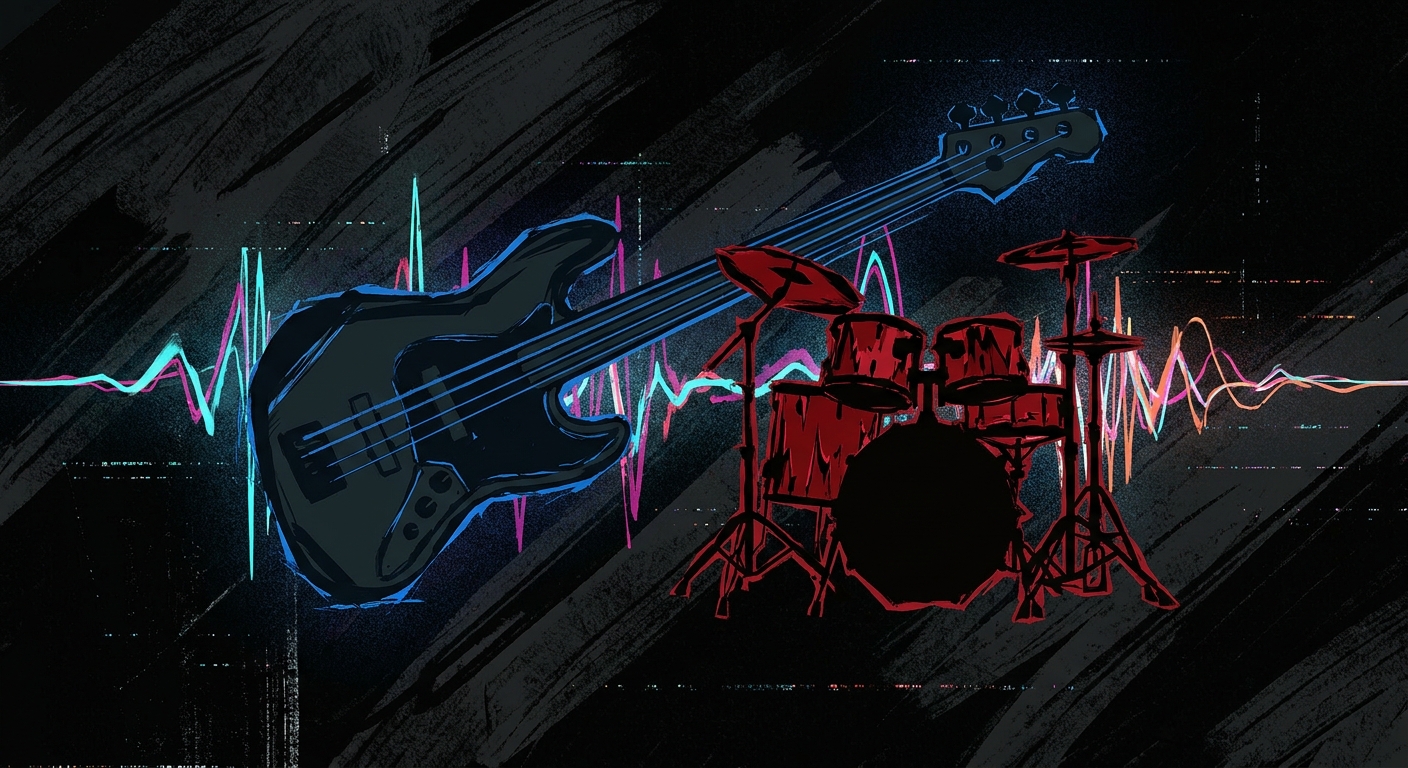
Moja, the Japanese punk hardcore duo comprised of Haru on bass and Harami on drums, stands as a testament to the adage that true artistic power often blossoms within constraint. In an era where sonic maximalism often dictates popular music, Moja deliberately pares down their setup to just two instruments. Far from being a limitation, this minimalist approach is the very crucible in which their distinctive, instantly recognizable sound is forged, transforming a potential hindrance into their undeniable artistic signature. This article delves into how Moja masterfully harnesses repetition, sonic density, and raw tension within this pared-down framework to carve out a uniquely powerful and compelling niche in the noise rock landscape.
The Deliberate Choice: Minimalism as a Creative Catalyst
At first glance, a two-piece band, especially one without a guitar, might seem inherently limited in its ability to produce a full and dynamic sound. Yet, for Moja, this "limitation" is a deliberate and empowering artistic choice. It forces a heightened level of creativity, demanding that each instrument contribute exponentially more to the overall sonic tapestry. This approach resonates with the punk ethos of DIY and stripping away excess, focusing on raw energy and direct communication. Historically, duos like The White Stripes or Death From Above 1979 have proven the potency of such setups, but Moja pushes this concept further into the visceral realms of hardcore and noise rock, where space and silence are as impactful as the noise itself.
Harnessing Repetition for Hypnotic Intensity
Repetition, a cornerstone of much punk and noise rock, is not a byproduct of simplicity for Moja; it is a meticulously wielded weapon. Their tracks often feature driving, cyclical basslines and relentless drum patterns that build a hypnotic, almost trance-like intensity. This isn't mere monotony; it's a deliberate sonic layering technique where slight variations, subtle shifts in emphasis, or the raw emotional delivery become magnified. The repetitive nature allows the listener to become fully immersed, almost enveloped by the groove, making the eventual, often explosive, breakdowns or accelerations all the more impactful. It creates a tension that is palpable, drawing the audience deeper into their sonic world before releasing it in a cathartic burst.
Sonic Density and the Art of Filling Space
Haru's Bass: The Undisputed Sonic Anchor
In Moja, Haru's bass transcends its traditional role. It is not merely the rhythmic foundation; it is the melodic voice, the lead instrument, and often the primary source of the band's characteristic noise. Her loud, often distorted basslines are rich with harmonics and overtones, filling the sonic spectrum that a guitar would typically occupy. Haru's command of her instrument allows her to create intricate riffs that are simultaneously brutal and melodic, sometimes almost dissonant, yet always driving the core of the song. The sheer volume and raw, unadulterated tone of her bass provide a visceral punch that is both physically felt and emotionally stirring, demonstrating how a single instrument can possess remarkable textural depth.
Harami's Drums: Precision in Frenzy
Complementing Haru's formidable bass is Harami's frenetic and precise drumming. Far from simply keeping time, Harami's percussive work is a dynamic force, a whirlwind of controlled chaos. Her beats are powerful, often fast-paced, and laden with intricate fills and abrupt rhythmic shifts that add a layer of unpredictable energy. She drives the momentum, building and releasing tension with expert timing. The interplay between her explosive drumming and Haru's anchoring bass creates a powerful, relentless rhythm section that feels far grander than a two-piece. The impact is immediate, a sonic assault that demands attention and physical response.
The Symbiotic Interplay
The true magic of Moja lies in the symbiotic interplay between Haru and Harami. They don't just play their instruments; they converse, collide, and coalesce into a singular, dense wall of sound. Each note, each beat, is amplified by the presence of the other. The absence of a third instrument forces an almost telepathic connection, where each musician must intuitively anticipate and respond to the other, creating a tightness and dynamism that few larger bands can achieve. This raw, unfiltered exchange of energy is the bedrock of their powerful sound.
The Live Performance: An Immersive Experience
Moja's minimalist setup reaches its zenith in their live performances. Stripped of studio embellishments, their raw power is unleashed in an unadulterated torrent. The sheer volume, the physical vibrations of Haru's bass, and the relentless assault of Harami's drums create an immersive experience that borders on catharsis. Their shows are not just concerts; they are intense, almost ritualistic encounters where the audience is fully enveloped by the sonic landscape. It is in this live setting that the power of their focused, constrained artistry truly shines, transforming venues into cauldrons of visceral energy.
An Unmistakable Artistic Signature
Ultimately, Moja's commitment to a two-instrument setup is far more than a practical choice; it is the very essence of their artistic identity. It has forced them to innovate, to push the boundaries of what a bass and drums duo can achieve, and in doing so, they have cultivated a sound that is singular and unmistakable. Their loud bass and frenetic drums, steeped in the traditions of Japanese punk and noise rock, demonstrate that constraint, when embraced with vision and skill, becomes the most potent catalyst for a truly unique and enduring artistic signature. Moja stands as a powerful reminder that sometimes, less is indeed profoundly more.