Introduction: The Unconventional Power of Moja
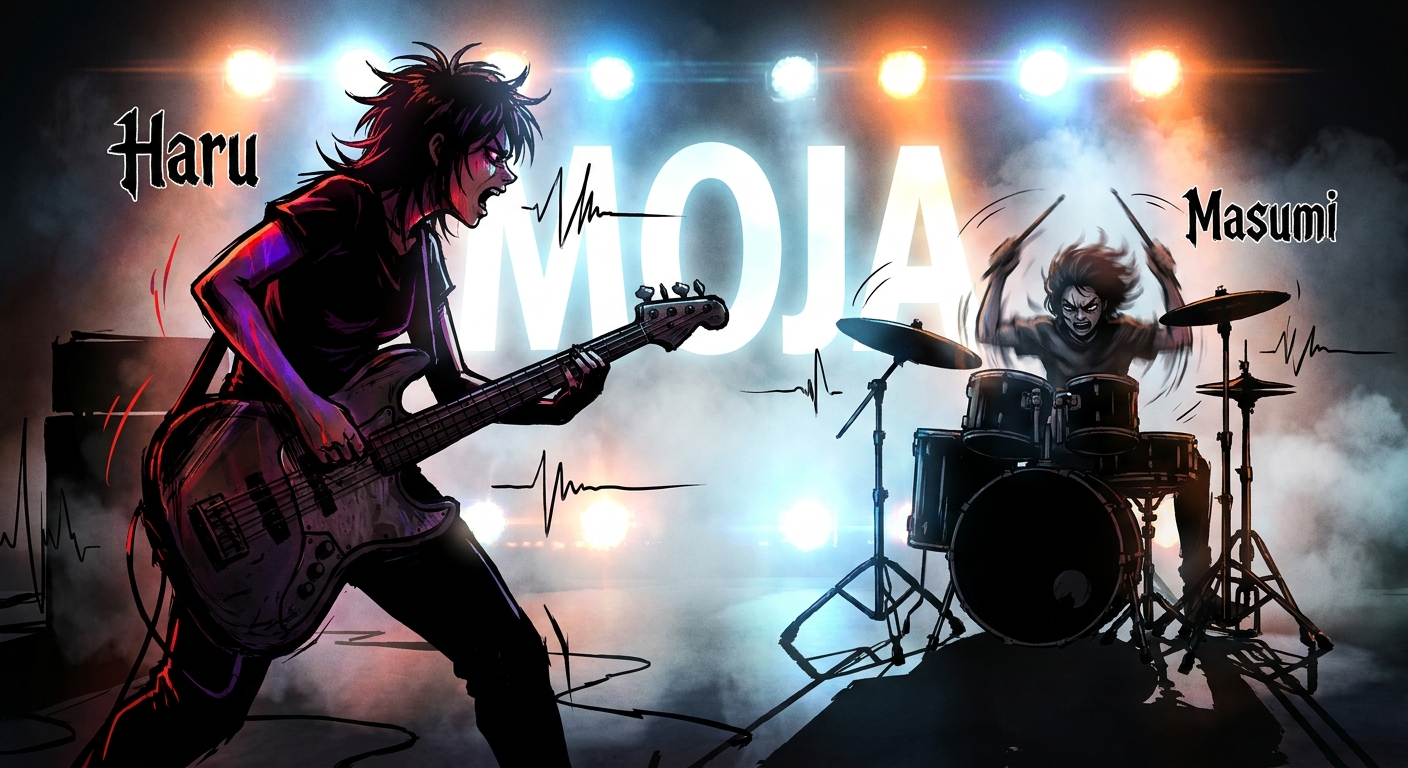
In the expansive and often guitar-dominated landscape of punk and hardcore, the Japanese duo Moja stands as a formidable anomaly. Comprising Haru on bass and Masumi on drums, they defy conventional band configurations, proving that raw power and sonic immensity are not contingent upon a multitude of instruments. Moja doesn't just play; they unleash a torrent of sound so dense and visceral that it’s frequently described as a 'sonic wall,' an impenetrable barrage forged by the sheer force of two exceptionally talented musicians. This article delves into the unique alchemy that allows Moja to command such a colossal presence, exploring the intricate dynamics between Haru's thunderous bass and Masumi's relentless drumming.
Deconstructing the Sonic Wall: Haru's Bass and Masumi's Drums
Haru's Thunderous Low End: The Foundation of Fury
Haru's bass playing is far more than a mere rhythmic foundation; it is the very fabric of Moja's sound, acting as both a lead instrument and a formidable generator of textural noise. He doesn't just hold down the low end; he expands it, distorts it, and weaponizes it. His aggressive attack and often fuzz-laden tone ensure that the sonic space typically occupied by a guitar is not just filled, but utterly saturated. Haru's basslines are intricate, melodic when necessary, but always retain a crushing weight, capable of shifting from guttural growls to searing, high-octane riffs that pierce through the mix. This versatility and his commitment to pushing the instrument's boundaries are pivotal to Moja's larger-than-life sound.
Masumi's Relentless Rhythms: The Driving Force
Complementing Haru's expansive bass is Masumi's drumming—a relentless, precise, and ferociously energetic assault. Masumi isn't just keeping time; she's driving the entire sonic locomotive. Her drumming is characterized by a high-octane punk rock urgency fused with hardcore's brute force, delivering a constant barrage of powerful beats, intricate fills, and explosive cymbal crashes. She provides both the unwavering backbone and the frenetic propulsion, often playing with such intensity that her drums feel like another lead voice. The synergy between her tight, explosive rhythms and Haru's booming bass is what gives Moja its distinctive, almost overwhelming, momentum.
Rhythmic Interplay and Dynamic Synergy
The true genius of Moja lies in the profound rhythmic interplay and dynamic synergy between Haru and Masumi. Rather than a simple call-and-response, their collaboration is a constant, evolving conversation where each instrument supports, challenges, and propels the other. They often lock into grooves with astonishing tightness, creating a percussive juggernaut, but are equally adept at moments of controlled chaos, allowing their individual expressions to intertwine in a whirlwind of noise rock intensity. They exploit the perceived emptiness of a two-piece setup by making their combined sound incredibly dense, leveraging every note and every beat to maximum effect. This dynamic push-and-pull is a testament to their exceptional communication and deep understanding of each other's musicality.
Beyond the Studio: The Live Experience
While Moja's studio recordings are undeniably powerful, it is their live performances that truly crystallize their legend. On stage, the duo’s energy is nothing short of volcanic. The sheer volume and physical presence of their sound are magnified, creating an immersive, almost suffocating experience for the audience. Haru and Masumi perform with an intensity that belies their minimalist setup, delivering a raw, visceral, and unadulterated punk rock spectacle. The absence of a guitar or additional instruments means there are no sonic hiding places; every note, every hit, is exposed and amplified, contributing to an honesty and immediacy that few bands can match. Their live show is not just a concert; it’s an endurance test for the senses, leaving audiences both exhausted and exhilarated.
The Moja Blueprint: Practical Takeaways for Musicians
For aspiring musicians, Moja offers invaluable lessons. Firstly, they demonstrate the profound impact of mastering one's instrument; Haru and Masumi don't just play their instruments, they push them to their absolute limits, exploring every sonic possibility. Secondly, their success underscores the importance of intense rhythmic communication and synergy within a band, regardless of its size. Understanding how to interact and complement each other's parts is key to creating a cohesive yet expansive sound. Finally, Moja exemplifies how limitations can be transformed into strengths. By embracing the constraints of a duo, they were forced to innovate, resulting in a unique sound that is undeniably their own. Their approach encourages musicians to be creative with instrumentation, explore unconventional arrangements, and cultivate an undeniably powerful stage presence that captivates audiences.
Conclusion: A Duo Redefining Heavy Sound
Moja stands as a brilliant example of how innovation, virtuosity, and unwavering intensity can defy conventional wisdom. Haru's thunderous bass and Masumi's relentless drumming don't just combine; they fuse into a singular, monumental force, crafting a sonic wall of unrivaled power. They have not only carved out a unique space in the Japanese punk hardcore and noise rock scenes but have also redefined what a two-piece band is capable of achieving. Moja is more than just a band; it's a testament to the boundless potential of focused musical energy, proving that true power resonates far beyond the number of instruments on stage.